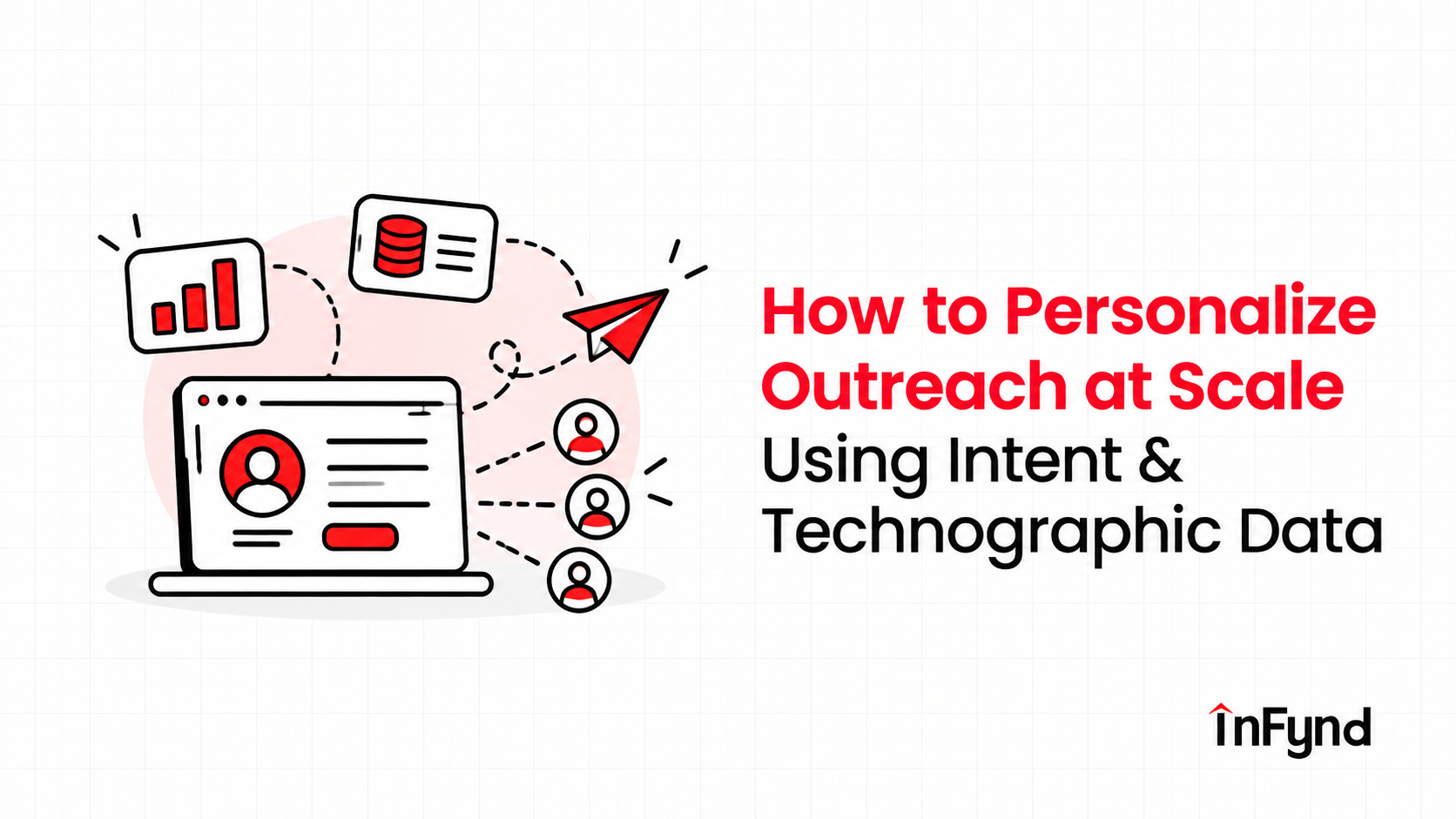
Generic outreach doesn't work anymore. Buyers expect messaging that reflects what they actually use and what they're actively researching. The challenge is doing that personalization across thousands of accounts, not just one at a time. That's where intent and technographic data come in.
What is Intent Data?
Intent data shows which companies are actively researching topics related to your product, based on content consumption, search behavior, and buying signals across the web. It tells you when a company is ready to engage.
What is Technographic Data?
Technographic data reveals the specific technologies a company uses: its CRM, marketing stack, cloud provider, and more. It tells you how a company operates, which shapes the angle of your outreach.
Together, these two data types answer the questions generic outreach can't: who is ready to buy, and what should you say to them.
Why Personalization at Scale Needs Both
Firmographic data (industry, size, revenue) tells you who fits your ideal customer profile. But fit alone doesn't mean timing or relevance. Layering intent and technographic data on top turns a broad target list into a prioritized, message ready one. This combination is central to any modern B2B lead generation strategy, since it replaces spray and send outreach with sequences built around real signals.
Step by Step: Personalizing Outreach at Scale
1. Start with a clean ICP: Build your account list using firmographic filters (industry, size, revenue, location). InFynd's B2B Data Solutions page covers how to structure this foundation correctly.
2. Layer in technographic data: Identify what tools each account already uses. If a prospect uses a competing platform, your messaging should address switching costs. If they use a complementary tool, your messaging should focus on integration.
3. Add intent signals: Prioritize accounts showing active research behavior around your category. These accounts get outreach first, and get a faster, more direct pitch since they're already in market.
4. Segment by signal combination: Group accounts by both technographic profile and intent strength. Each segment gets a distinct message template, not a single generic script sent to everyone.
5. Automate without losing relevance: Use these segments to drive personalized email sequences and ad targeting at scale, while keeping each message anchored to the specific tech stack or signal that triggered it.
6. Keep your CRM data current: Personalization breaks down fast on outdated records. A regular CRM Data Health Check keeps segmentation accurate as accounts change tools or buying stage.
Common Mistakes to Avoid
• Treating intent data as a one time list pull instead of an ongoing signal to monitor.
• Personalizing only the subject line while the message body stays generic.
• Ignoring technographic mismatches, like pitching a CRM integration to a company that doesn't use a compatible CRM.
• Skipping industry specific data when your product varies significantly by sector.
Conclusion
Personalization at scale isn't about writing thousands of individual emails. It's about building segments precise enough that a template feels personal. That precision depends on accurate, connected data, which is exactly what strong B2B data providers are built to deliver.
InFynd's Intent & Signals data pairs with detailed technographic and firmographic profiles across 240M+ verified contacts and 12M+ companies, so your team can prioritize the right accounts and message them with real relevance, not guesswork. It's a foundational layer for any serious B2B lead generation strategy.
FAQ
1. What's the difference between intent data and technographic data?
Intent data shows what a company is actively researching right now. Technographic data shows what technology a company already uses. Intent tells you timing, technographic tells you context.
2. Can small sales teams personalize outreach at scale without extra headcount?
Yes. Segmenting accounts by intent and technographic signals lets a small team build a handful of targeted templates instead of writing every email manually, making scale achievable without adding reps.
3. How often should intent data be refreshed?
Intent signals should be monitored weekly or even daily, since buying interest can shift quickly and stale signals lead to poorly timed outreach.
4. Does personalized outreach actually improve response rates?
Yes. Messaging that reflects a prospect's actual tech stack and current research activity consistently outperforms generic, one size fits all outreach.
5. Where can B2B teams get reliable intent and technographic data?
Established B2B data providers like InFynd offer verified intent and technographic data alongside firmographic profiles, giving teams a single source for building personalized, scalable outreach.