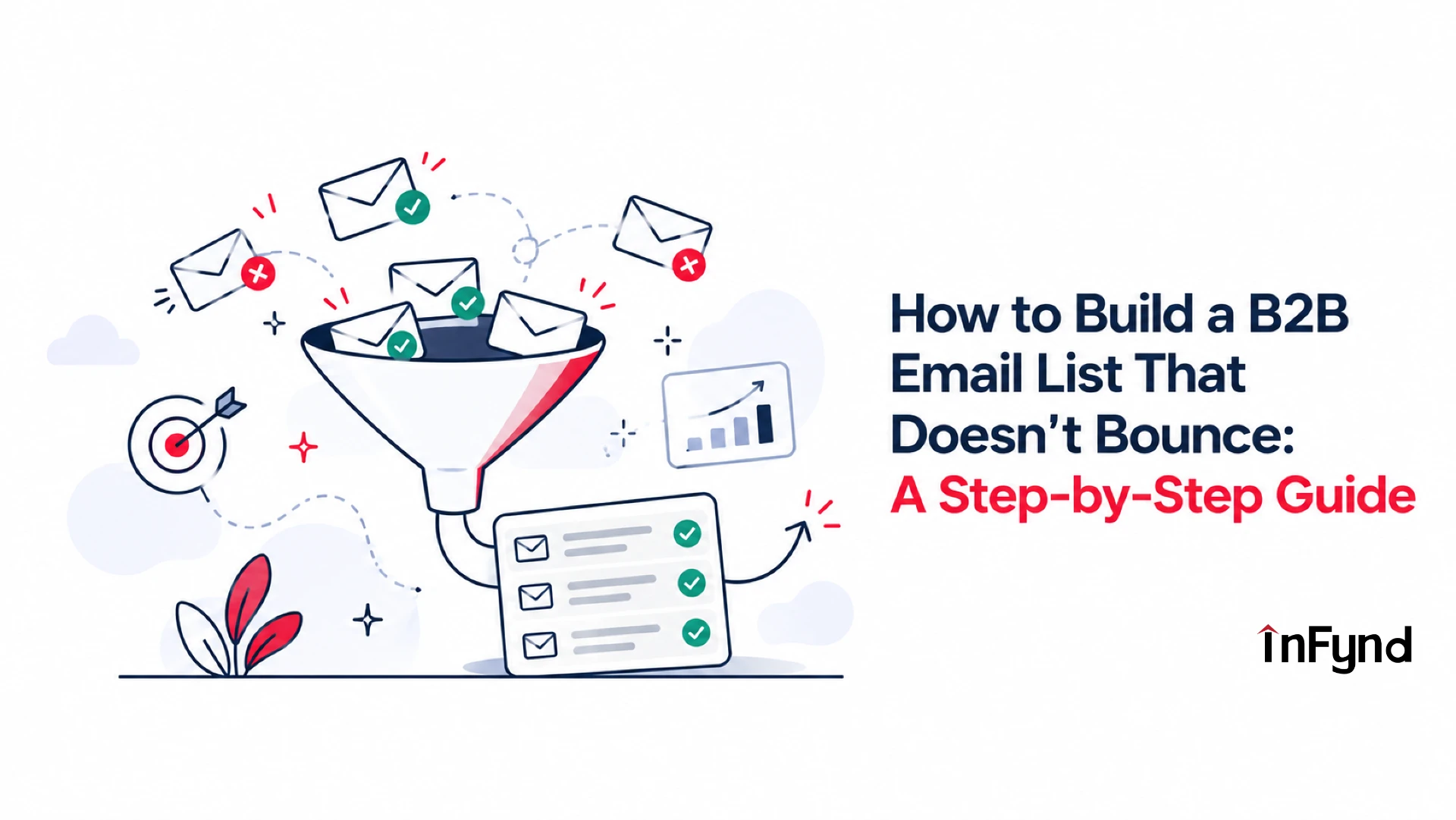
A B2B email list is only an asset if the messages reach real inboxes. A list full of outdated or invalid addresses does the opposite: it raises your bounce rate, damages your sender reputation, and pushes even your good emails toward spam. Since Google and Yahoo tightened their bulk sender rules, email deliverability has become a core part of lead generation, not a technical side issue.
This step-by-step guide shows you how to build a B2B email list that stays clean, so you can reduce bounce rate from the very first send.
Why B2B Emails Bounce in the First Place
There are two types of bounce. A hard bounce is permanent: the address does not exist, the domain is wrong, or the mailbox was closed. A soft bounce is temporary, such as a full inbox or a server problem.
The most common causes on a B2B list are:
• Job changes. People leave companies, and their work address is deleted.
• Typos and bad formatting from manual entry or web forms.
• Guessed addresses. Assuming a pattern like firstname@company.com without checking it.
• Decay over time. Even a good list loses accuracy every month as roles and companies change.
• Unverified purchased lists with no documented source or checks.
Step 1: Start With Your Ideal Customer Profile
Define who you actually want to reach before you collect a single address: industry, company size, region, department and seniority. A focused list is easier to keep accurate than a broad one, and targeted messages earn fewer spam complaints.
Step 2: Choose Your Data Source Carefully
Where your contacts come from decides how clean the list will be. Reliable sources include a reputable B2B data provider that documents how its data is sourced and verified, your own opted-in leads, and carefully checked public information. Avoid scraped or anonymous lists with no clear origin, because they carry both deliverability and compliance risk.
Step 3: Run Email Verification Before You Send
Email verification checks an address without sending a message. A good verification process confirms the syntax is correct, the domain exists and can receive mail, and the mailbox is likely to be active. It also flags risky categories such as catch-all domains, disposable addresses and role-based inboxes like info@ or sales@. Verify new contacts before they enter your CRM, and re-verify older ones before any major campaign.
Step 4: Enrich Records So You Can Segment
A name and an email is not enough to run a smart campaign. Data enrichment adds job title, department, seniority, company size, industry and location, which lets you segment accurately and personalize each message. Enrichment also helps you spot records that no longer match your profile, so you can remove them before they cause bounces.
Step 5: Set Up Your Sending Infrastructure
Even a perfect list can fail with weak technical setup. Make sure your domain has SPF, DKIM and DMARC authentication in place, warm up new sending domains gradually, and keep your spam complaint rate low. Mailbox providers now expect these basics from anyone sending in volume.
Step 6: Send in Small Batches and Watch the Signals
Start with a small test batch before a full send. Track your bounce rate, and remove hard bounces immediately. Many email platforms begin to flag senders when bounce rates climb above roughly 2%, so treat a rising number as a warning to pause and clean the list.
Step 7: Keep the List Clean on a Schedule
A clean list today is not a clean list in six months. Build a routine: re-verify the list before large campaigns, remove inactive and bounced contacts, refresh job titles and companies, and suppress anyone who unsubscribes. Treat list hygiene as ongoing maintenance, not a one-time project.
How InFynd Helps You Build a List That Delivers
A B2B email list that doesn't bounce is not built by one tool or one tactic. It comes from accurate data at the start, verification before every send, enrichment that keeps records useful, and regular maintenance afterward. Get the data layer right and every campaign that follows performs better.
That data layer is what InFynd is built around. Our B2B data intelligence platform gives revenue and marketing teams verified contact and company information, so lists start accurate instead of needing repair later. Our data enrichment tools add the missing details, such as job title, seniority, company size and industry, and refresh outdated records so your segments stay reliable. If you suspect your current database has already decayed, our CRM health check is a practical place to see where the gaps are. We can also build custom datasets around your ideal customer profile, so your outreach reaches the right people from the first send.
If you want more practical guidance on data quality, lead generation and email deliverability, explore the InFynd blog for new articles.
FAQ
What is a good bounce rate for a B2B email list?
Aim to stay as low as possible. Many email platforms flag senders above about 2%, so treat that as an upper warning level.
Does email verification guarantee delivery?
No. It greatly reduces bounces, but delivery also depends on your sender reputation, authentication and content.
How often should I clean my B2B email list?
Before every major campaign, and on a regular schedule, because contact data decays continuously.
Is buying a B2B email list a good idea?
Only from a provider that documents its sourcing and verification process. Anonymous, unverified lists put your deliverability and compliance at risk.