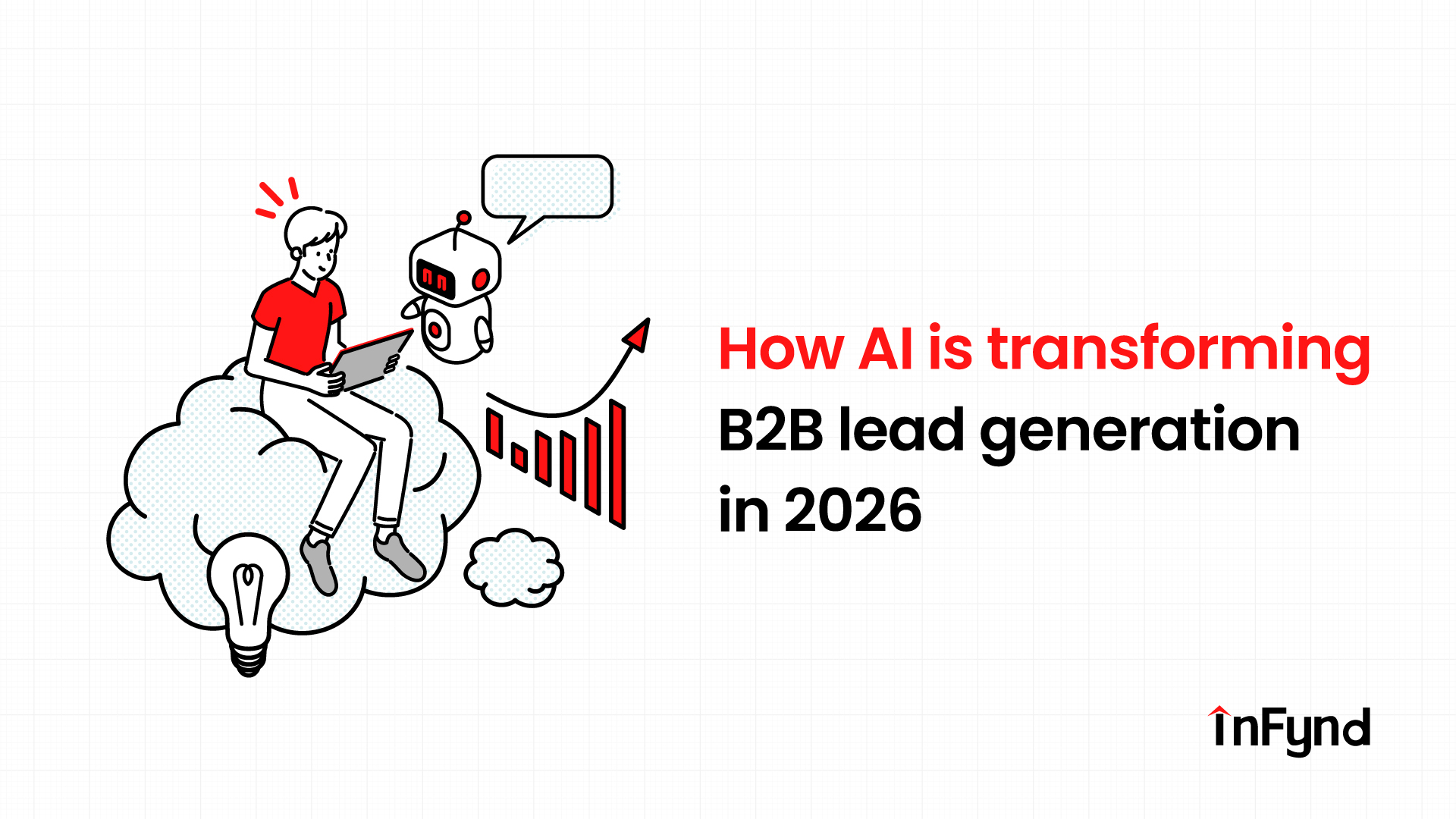
Discover how AI is revolutionizing B2B lead generation. Explore AI-powered techniques and trends shaping the future of B2B marketing and lead qualification.
AI's Role in B2B Lead Generation
The B2B sales environment has experienced a transformative shift. The traditional approach of casting a broad net to attract potential leads is obsolete. By 2026, AI B2B lead generation will have revolutionized how businesses identify, qualify, and engage with prospective buyers, transitioning from broad tactics to precision-driven strategies.
AI's core innovation in lead generation lies in its ability to balance scale with personalization. Advanced AI systems process vast data sets, examining company behaviors, technographic signals, and engagement patterns to pinpoint prospects who are truly in-market. This capability uncovers opportunities that manual research could never reveal.
The implications are significant. 63% of marketers now utilize generative AI for content creation, while 67% of B2B marketers employ AI for data insights. The real change isn't just in adoption rates but in integrating advanced data intelligence with automated processes.
This shift offers three key advantages: predictive lead scoring to identify high-intent prospects, dynamic personalization that adjusts messaging in real-time, and intelligent resource allocation focusing sales efforts on the most promising opportunities.
Strategic Shifts: AI B2B Lead Generation in 2026
The outdated "spray-and-pray" method is not only inefficient but also detrimental to brand reputation. Companies using mass outreach often see response rates under 1% and risk their messages being ignored or marked as spam.
The change isn't just technological but strategic. Modern AI systems enable "precision targeting," allowing engagement with prospects based on complex behavioral and firmographic signals instead of basic demographics.
For example, instead of targeting every marketing director at large firms, AI narrows the focus to directors facing specific challenges, researching relevant solutions, and showing purchase-ready behavior.
This approach yields tangible benefits. Organizations implementing AI-driven targeting report a 50% improvement in qualified leads and reduce contact volumes by 60-70%. Fewer interactions lead to higher engagement and better outcomes.
The transformation relies on three capabilities: Intent signal processing identifies active buyers, predictive scoring evaluates conversion likelihood, and dynamic segmentation adjusts targeting in real-time.
Precision requires quality data and ongoing calibration to maintain accuracy, affecting how businesses structure their lead qualification processes.
AI Tools and Technologies for B2B Marketing in 2026
AI-powered marketing tools have evolved into sophisticated ecosystems. Autonomous AI agents manage complex tasks like prospect research and personalized content delivery without constant human input. These aren't mere chatbots; they're adaptive decision-makers.
Key tools include predictive analytics platforms that enhance conversion rates by 15-20% based on B2B benchmarks. Intent monitoring tracks buyer behavior to identify active prospects, and conversational AI now qualifies leads through nuanced dialogue.
What distinguishes 2026's tools is integration. These technologies connect through unified data platforms, creating comprehensive buyer profiles. When high purchase intent is detected, systems alert sales teams, adjust ad targeting, and personalize content, ensuring cohesive buyer experiences. The focus is on deploying interconnected systems that enhance each other's capabilities.
Generative Engine Optimization: Beyond Traditional SEO
Traditional SEO remains essential, but B2B marketers face a new challenge: optimizing for AI-powered search experiences. Generative Engine Optimization (GEO) adapts content for AI-driven interfaces like ChatGPT, which synthesize information rather than list links.
When prospects ask AI assistants questions, they get synthesized answers from multiple sources. Visibility depends on being cited as a source, not just ranking high in search results.
For lead generation, this changes how prospects find solutions. Companies focusing on content quality and authority see better visibility in traditional and AI-generated results. Core principles include demonstrating expertise and answering questions comprehensively.
AI-powered lead qualification extends beyond internal processes to how AI systems evaluate content for inclusion in responses. This dual optimization challenge requires content structured for both human and AI audiences.
Example Scenarios: AI in Action for Lead Generation
AI's practical applications in lead generation are vast. A B2B software company targeting enterprise clients used AI tools to create personalized sequences based on industry challenges, company size, and business developments. This approach increased response rates by 47% compared to template-based strategies.
In another case, a manufacturing supplier used AI to track intent across digital touchpoints. When a prospect engaged with specific content, the system prioritized them for sales follow-up, enhancing messaging relevance and timing.
These implementations highlight intelligent orchestration, where technology amplifies human judgment by providing timely, relevant information, reducing the gap between initial interest and meaningful engagement.
Common Misconceptions About AI in B2B Marketing
Despite AI's transformative potential, misconceptions persist. Understanding AI's true capabilities helps set realistic expectations and avoid costly errors.
AI Won't Replace Human Marketers
AI won't eliminate marketing roles. Human oversight is essential for strategy and relationship building. AI excels at pattern recognition and automation but can't replace strategic thinking or nuanced communication.
Implementation Doesn't Require Massive Budgets
Effective AI doesn't demand huge budgets. Many platforms offer scalable solutions. The key is selecting tools that fit business needs and integrate with existing workflows and verified data sources .
Data Quality Matters More Than Data Volume
More data isn't always better. Accuracy and relevance are crucial. Clean, verified data produces better outcomes than large, outdated databases. Curated datasets often outperform massive, unvetted lists.
Results Take Time to Materialize
Expecting immediate results is unrealistic. AI systems need training and optimization. Measurable improvements typically occur over quarters, not weeks, requiring patience and commitment.
Key AI B2B Lead Generation Takeaways
AI's role in transforming B2B lead generation is not just about adopting new technology, it's about rethinking how businesses engage prospects. Companies that integrate AI report higher conversion rates and more efficient resource use. Industry benchmarks show AI tools improve lead quality and sales velocity. Success requires a holistic approach, blending technology with data infrastructure and human expertise.
Invest in data foundations and cross-functional AI literacy to capitalize on future innovations. Start small, measure success, and scale effective strategies. The question isn't if AI will transform lead generation, but whether your organization will lead or follow this transformation.
1. How does AI improve lead generation in B2B marketing?
AI enhances lead generation by analyzing large data sets to identify high-intent prospects, enabling personalized engagement and efficient resource allocation, ultimately increasing conversion rates.
2. What are the key tools for AI-powered B2B marketing in 2026?
Key tools include predictive analytics platforms, intent monitoring systems, and conversational AI, all integrated through unified data platforms to create comprehensive buyer profiles.
3. Can AI replace human marketers in B2B lead generation?
No, AI cannot replace human marketers. While AI excels in data analysis and automation, human oversight is essential for strategic thinking, creative direction, and relationship building.