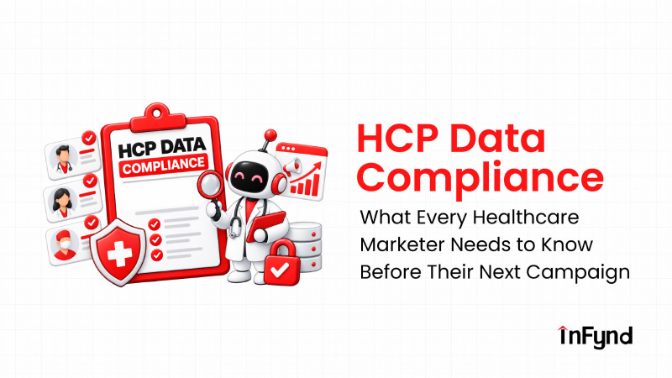
Healthcare marketing runs on data, but not just any data. HCP data compliance has become one of the biggest risk areas for pharma, medtech, and healthcare marketing teams in 2026. A single non-compliant list, an unverified contact, or an unconsented outreach can trigger regulatory penalties, damage provider trust, and derail an entire campaign before it starts. If you're planning your next campaign targeting healthcare professionals, understanding healthcare data compliance isn't optional, it's the foundation everything else is built on. At InFynd Healthcare, we work exclusively with verified healthcare professional (HCP) data, giving marketers access to 3.1M+ verified contacts built for compliant, accurate outreach. Here's what every healthcare marketer needs to know before launching their next campaign.
Why HCP Data Compliance Matters More Than Ever
Regulations like HIPAA, GDPR, and country-specific healthcare marketing laws govern exactly how healthcare professional data can be collected, stored, and used for outreach. Non-compliant HCP databases, often built from scraped, outdated, or unverified sources, put marketing teams at direct legal and reputational risk. Beyond regulation, poor data quality also wastes budget: emails bounce, calls reach the wrong specialty, and campaign ROI collapses.
Compliant healthcare marketing isn't just about avoiding fines. It's about building trust with physicians, nurses, and specialists who are far more likely to engage with outreach that respects their time, specialty, and consent preferences.
5 HCP Data Compliance Essentials Before Your Next Campaign
1. Verify Consent and Data Sourcing
Every contact in your HCP contact list should be traceable to a compliant, consent-based source. Avoid vendors who can't clearly explain where their healthcare professional data originates.
2. Check for GDPR and Regional Compliance
If your campaign targets healthcare professionals across regions, your data provider needs to meet GDPR-compliant HCP data standards, not just U.S.-based regulations. This matters increasingly for global pharma and medtech marketing teams.
3. Prioritize Data Accuracy and Freshness
Healthcare professionals change roles, hospitals, and specialties often. Outdated data isn't just inefficient, in regulated industries, contacting the wrong recipient with the wrong messaging carries compliance implications too.
4. Segment by Specialty and Credential
Effective, compliant campaigns rely on accurate HCP segmentation, targeting by specialty, license type, practice setting, and prescribing behavior, rather than broad, generic healthcare lists.
5. Work with a Purpose-Built Healthcare Data Partner
General B2B data providers often repurpose business contact data for healthcare use, which increases compliance risk. A healthcare-specific data provider understands the regulatory nuances that generic vendors miss. This is exactly where InFynd Healthcare's HCP data marketplace is built differently — every dataset is sourced, verified, and structured specifically for compliant healthcare marketing and sales outreach.
Building a Compliant Campaign: Where to Start
Most healthcare marketers don't need a massive, generic database, they need a targeted, verified HCP list built around a specific campaign objective, specialty, or geography. That's where a custom healthcare list builder becomes valuable: rather than filtering through millions of irrelevant contacts, marketers can request a tailored, GDPR-compliant dataset delivered in 5–7 business days, built around their exact targeting criteria.
This approach solves two problems at once: it keeps campaigns fully compliant, and it dramatically improves response rates because every contact is genuinely relevant to the outreach.
The Cost of Getting HCP Data Compliance Wrong
Non-compliant healthcare marketing campaigns don't just risk regulatory penalties, they damage sender reputation, increase spam complaints, and erode the trust healthcare professionals place in outreach from pharma, medtech, and healthcare service brands. In an industry where trust directly influences engagement and prescribing relationships, one non-compliant campaign can have a ripple effect across future outreach.
Marketers who prioritize verified, compliant HCP data consistently see stronger deliverability, higher engagement, and safer long-term brand reputation, a trade-off that far outweighs the lower upfront cost of unverified data sources.
Why InFynd Healthcare
InFynd Healthcare was built specifically to solve this problem: providing marketers with accurate, compliant, and continuously verified healthcare professional data is not repurposed business contact lists. With 3.1M+ verified HCP contacts and a data infrastructure designed around healthcare-specific compliance needs, InFynd Healthcare helps marketing and sales teams launch campaigns with confidence instead of risk.
Learn more about our approach to compliant healthcare data on our About page or explore the full platform at InFynd Healthcare to see how verified HCP data can power your next campaign.
FAQs
1. What is HCP data compliance?
HCP data compliance refers to the regulatory and ethical standards, such as HIPAA and GDPR, that govern how healthcare professional contact data is collected, stored, and used for marketing or sales outreach. It ensures data is sourced with proper consent and used responsibly.
2. Why is verified HCP data important for healthcare marketing campaigns?
Verified HCP data ensures outreach reaches accurate, up-to-date contacts with correct specialties and credentials. This improves campaign performance while reducing compliance risk associated with outdated, unconsented, or mistargeted healthcare data.
3. How is healthcare-specific data different from general B2B data?
General B2B data providers often lack the regulatory structure and specialty-level detail required for compliant healthcare marketing. Healthcare-specific data providers like InFynd Healthcare source, verify, and segment data specifically for HCP outreach, reducing both compliance and targeting risk.