Poor data quality costs organisations millions every year in missed calls, bad fit prospects and forecasts nobody trusts. For B2B sales and revenue teams, the fix isn't more data. It's better data, used well.
This guide breaks down what sales data actually is, why it matters, the different types you'll encounter, and how to choose a provider you can build your pipeline on.
What Is Sales Data?
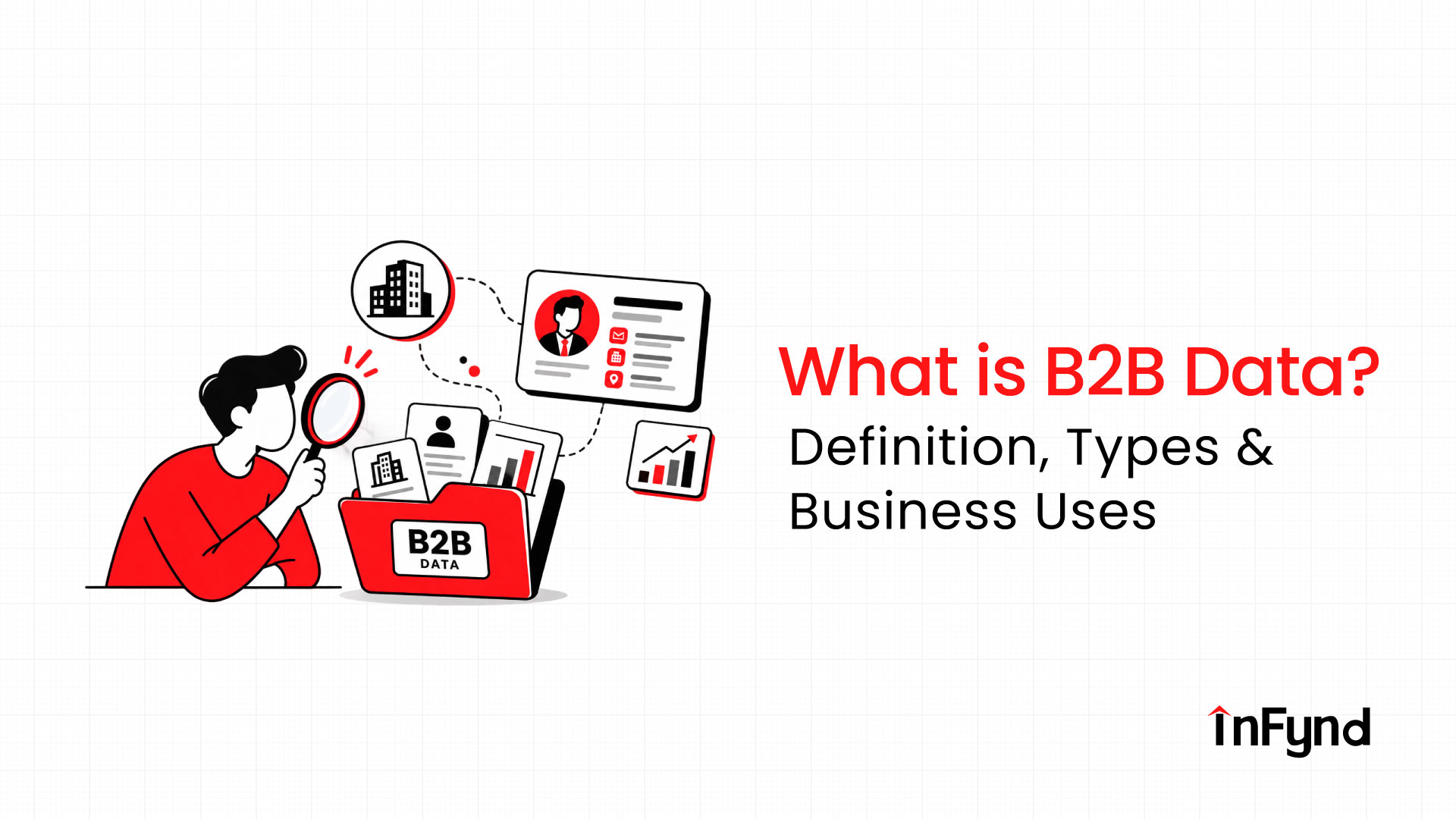
Sales data is any information that helps a business understand, manage, improve or predict its sales activity. That covers a lot of ground: the people you sell to, the companies they work for, the conversations your reps have, the state of your pipeline, and the revenue your team has already closed.
In simple terms: B2B sales data is the structured and unstructured information sales teams use to identify buyers, manage relationships, measure performance and improve revenue outcomes.
That includes the obvious data points, names, job titles, phone numbers, email addresses, company names, and deeper signals like hiring activity, funding news, technology usage, intent topics and deal stage movement.
Sales Data vs Sales Analytics
These two terms get used interchangeably, but they're not the same thing.
• Sales data is the raw information.
• Sales analytics is the process of analysing that data to find patterns and decide what to do next.
A list of closed won deals is sales data. A dashboard showing that one segment closes 28% faster is sales analytics. A manager shifting outbound focus toward that segment is data driven sales in action.
First Party, Second Party and Third Party Data
• First party data comes from your own channels: CRM records, website form fills, product usage, email engagement, demo requests.
• Third party data comes from external providers, and in B2B sales this usually means verified contact data, firmographic data, intent data and enrichment data. A reliable provider fills the gaps in your CRM and keeps your records current.
• Second party data is another company's first party data, shared through a partnership. Less common day to day, but useful in co selling and channel programmes.
Why Data Quality Matters More Than Data Volume
It's easy to assume more records mean more opportunity. In practice, a large list of unverified or outdated contacts usually does more harm than good. Bounced emails hurt sender reputation, stale job titles waste rep time, and duplicate records quietly inflate your pipeline numbers.
Two things make the biggest difference:
Verification: Contact data decays fast. People change roles, companies merge, emails go stale. Ongoing email verification, rather than a one time cleanse, keeps your outreach landing in inboxes instead of bouncing.
Compliance: For UK and EU teams especially, sales data has to be sourced and processed in line with GDPR. A provider that can't clearly explain how their data is collected and consented isn't one to build a pipeline on, regardless of how large their database looks.
Clean, compliant data doesn't just protect deliverability. It's what makes everything downstream (forecasting, personalization, AI assisted outreach) actually trustworthy.
Why Is Sales Data Important?
Without reliable data, B2B sales becomes reactive: reps pick accounts on instinct, managers coach from anecdotes, and forecasts turn into optimistic guesses. Good data replaces a lot of that guesswork with evidence.
Prioritizing the Right Accounts
Most teams have more potential accounts than they can reasonably work. Accurate firmographic, technographic and intent data lets reps quickly answer: Is this company in our ICP? Does it use technology that creates a relevant pain point? Is it hiring in ways that signal growth? Rather than working off a generic list, reps can focus on accounts with real fit and timing.
Personalising Outreach at Scale
Generic outreach gets ignored. Good sales intelligence data, role, company size, recent funding or leadership changes, technologies in use, gives reps enough context to explain why they're reaching out now, without hours of manual research per account.
Building Credible Forecasts
Reliable forecasting depends on combining historical data, current pipeline, deal stage conversion rates and sales cycle length. If your CRM is full of stale opportunities or inconsistent stage definitions, the forecast built on top of it won't hold up, no matter how good the model looks.
Coaching Reps with Data, Not Assumptions
Data driven coaching moves the conversation from vague feedback to specific patterns: a rep who books plenty of meetings but struggles to convert them, or one who consistently loses deals at procurement because they multithread too late. CRM activity, call data and conversion metrics make that visible.
Aligning Sales and Marketing
Sales and marketing often work from different definitions of "good." Shared, accurate data helps both teams agree on what a good fit account looks like, which sources create qualified pipeline, and which messaging actually converts, rather than marketing celebrating volume while sales complains about quality.
Powering AI Agents With Clean Data
AI in sales is only as good as the data underneath it. Agents that research accounts, draft outreach or score leads inherit whatever's in your CRM, including the duplicates, gaps and outdated records. No amount of AI sophistication fixes a broken data foundation. Clean, well connected data is what makes those tools genuinely useful rather than confidently wrong.
What Are the Different Types of B2B Sales Data?
• Demographic data: individual level details like job title, seniority and department.
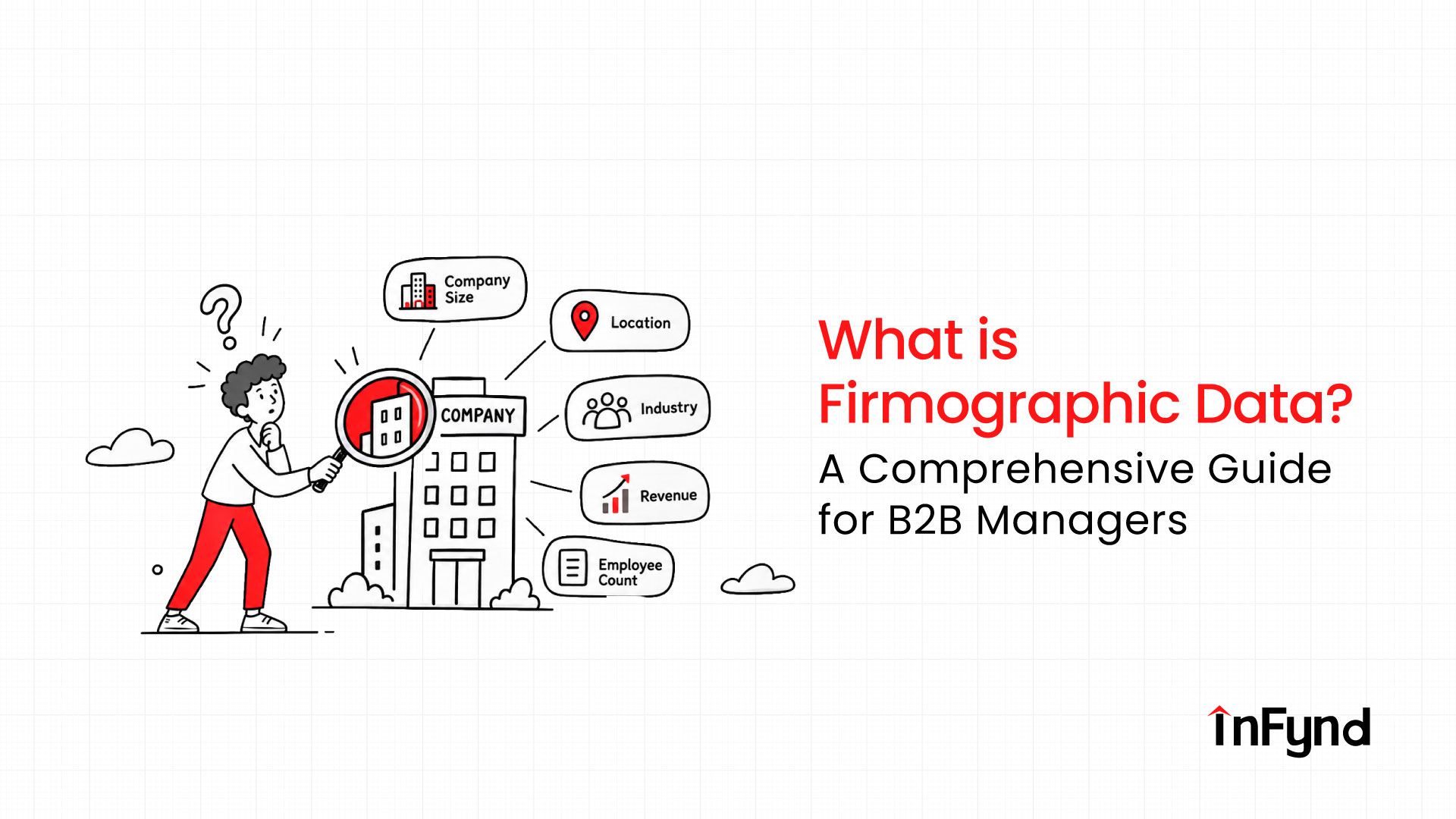
• Firmographic data: company level details like industry, headcount and revenue.
• Technographic data: the technologies and platforms a company uses.
• Intent data: signals that a company is actively researching a relevant topic or solution.
• Trigger data: events like funding rounds, leadership changes or expansions that signal timing.
• Engagement data: how prospects interact with your emails, content and website.
• Pipeline data: the current state and value of open opportunities.
• Customer data: usage, renewal and support history for existing accounts.
• Performance data: rep and team metrics like win rate, average deal size and cycle length.
How to Choose a B2B Sales Data Provider
If you're sourcing third party data to fill CRM gaps, a few criteria matter more than list size:
• Verification methodology: how (and how often) is contact data checked for accuracy?
• Refresh frequency: is the data actively maintained, or a static snapshot?
• Coverage: does it match your target regions and industries?
• Compliance: is the data collected and processed in line with GDPR and other relevant regulations?
• Integration: does it connect cleanly with your existing CRM and workflow?
This is the kind of foundation InFynd is built around: verified, current B2B contact and company data designed to hold up under real sales use, not just look good in a demo.
FAQs
What are the main types of sales data?
The core categories are demographic, firmographic, technographic, intent, trigger, engagement, pipeline, customer and performance data.
Is sales data the same as CRM data?
Not quite. CRM data is where sales data is often stored and managed, but sales data itself can come from many sources: your CRM, third party providers, website analytics and more.
How often should B2B sales data be refreshed or verified?
Contact data decays quickly as people change roles and companies. Most teams benefit from ongoing verification rather than a one off cleanse, quarterly at minimum, more often for active outbound lists.
What's the difference between sales data and sales intelligence?
Sales data is the raw information. Sales intelligence is that data enriched and interpreted to guide a specific action, like knowing not just who a prospect is, but why now is the right time to reach out.