Every sales and marketing decision your team makes, who to target, when to reach out, what to say, depends on one thing: data. Yet ask five people what is B2B data and you'll likely get five different answers. That confusion is costly. Teams working from incomplete or poorly defined data end up chasing the wrong accounts, wasting ad spend, and losing deals to competitors who simply know their market better.
This guide breaks down exactly what B2B data is, the core types every revenue team should understand, and how businesses use it in practice, plus how InFynd helps you turn raw data into pipeline.
What Is B2B Data?
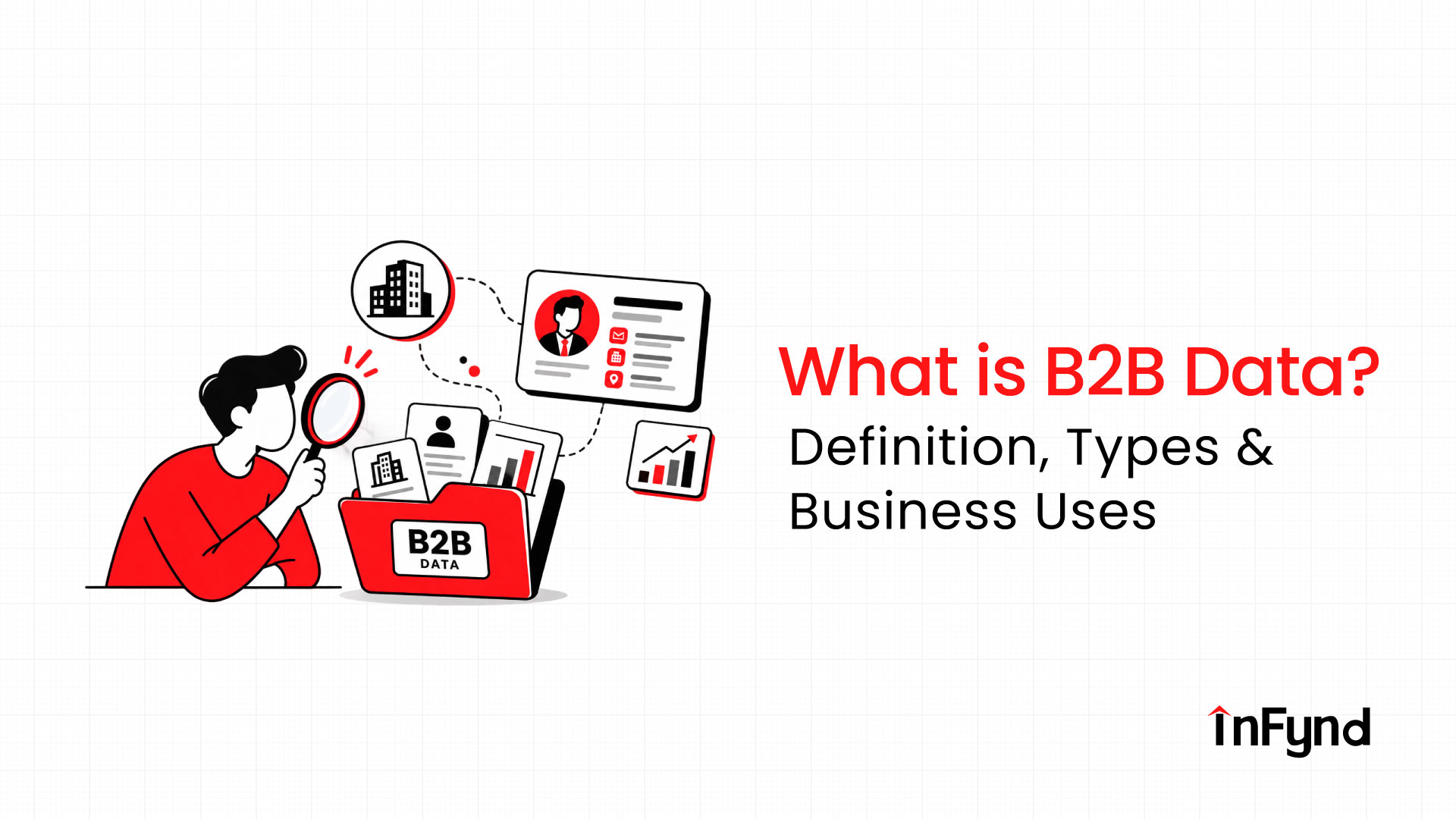
B2B data refers to any information collected about businesses and the individuals who work within them, used to identify, understand, and engage potential customers in a business-to-business context. Unlike consumer (B2C) data, which centers on individual preferences and personal behavior, B2B data combines company-level details (like industry, revenue, and headcount) with contact-level details (like job title, department, and seniority) to help sales and marketing teams reach the right decision-maker at the right organization.
In simple terms, B2B data answers three questions: which companies should you target, who within those companies makes or influences the buying decision, and when is the right moment to reach out. Get those three rights, and outreach stops being guesswork.
Why B2B Data Matters for Sales and Marketing Teams
Modern b2b sales and marketing no longer run on instinct or cold-calling from a phone book. Buying committees are larger, sales cycles are longer, and buyers do most of their research before a rep ever gets involved. Reliable B2B data is what allows teams to:
• Identify accounts that match their ideal customer profile (ICP) before spending time or budget on outreach
• Personalize messaging based on industry, company size, or role, rather than sending generic pitches
• Prioritize leads showing real buying signals instead of treating every contact the same
• Keep CRM and marketing automation platforms clean, accurate, and up to date
Without this foundation, even the best-crafted campaign underperforms simply because it's reaching the wrong people, or no one at all.
Types of B2B Data
Not all B2B data serves the same purpose. Most go-to-market teams work with a mix of the following types, each answering a different question about a prospect.
1. Firmographic Data
Firmographic data describes the company itself: industry, company size, annual revenue, number of employees, headquarters location, and years in business. It's the business equivalent of demographic data and forms the backbone of most segmentation and targeting strategies.
2. Contact Data
Contact data covers the individuals within a target company, names, job titles, seniority levels, direct emails, and phone numbers. This is what makes a list actionable; without verified contact data, even a perfectly segmented list of companies is just a list of names you can't reach.
3. Technographic Data
Technographic data reveals the software, tools, and platforms a company already uses. Knowing a prospect's tech stack helps sales teams tailor their pitch, for example, positioning an integration or a competitive alternative to a tool the company already has.
4. Intent Data
Intent data tracks buying signals, such as content downloads, website visits, or search behavior, that indicate a company is actively researching a solution like yours. This is a core input for market intelligence helping teams reach out while a prospect is genuinely in-market rather than cold.
5. Firmographic Growth Signals
Growth signals, like recent funding rounds, leadership changes, hiring surges, or office expansions, indicate a company has budget and momentum. These signals often precede purchasing decisions, making them valuable for timing outreach.
6. Transactional and Engagement Data
This includes a company's past interactions with your business: previous purchases, email opens, event attendance, or support tickets. It's especially useful for account-based marketing (ABM) and customer expansion strategies.
Where Does B2B Data Come From?
High-quality B2B data typically comes from a combination of sources: public company filings and registries, verified opt-in databases, website and intent tracking tools, CRM and marketing automation platforms, and data providers who aggregate, clean, and enrich this information at scale.
The reliability of your data strategy depends heavily on how that data is sourced, verified, and refreshed, stale or scraped data leads to high bounce rates, wasted spend, and compliance risk.
Business Uses of B2B Data
Once collected and organized, B2B data powers nearly every revenue-generating activity across an organization:
• Lead generation and prospecting: Building targeted lists of companies and contacts that match your ICP, so reps spend time selling instead of researching.
• Account-based marketing (ABM): Using firmographic and intent data to identify and prioritize high-value target accounts.
• Sales prospecting and outreach: Equipping sales teams with verified, direct contact details to reduce time wasted on dead leads.
• Demand generation: Fueling email campaigns, webinars, and content syndication with permission-based, accurate audiences.
• Market intelligence and competitive research: Understanding market movements, growth signals, and shifting buyer behavior to inform strategy.
• Customer segmentation and personalization: Tailoring messaging and offers based on industry, role, or company stage.
• CRM enrichment: Filling gaps in existing records so sales and marketing platforms stay accurate and usable.
How to Ensure B2B Data Quality
Not all B2B data is created equal, and poor-quality data can do more harm than good. When evaluating a data source or provider, look for:
• Accuracy and verification: Contacts should be regularly verified, not scraped once and left to decay.
• Compliance: Data should be collected and delivered in line with GDPR, CCPA, and other relevant privacy regulations.
• Freshness: People change jobs, companies merge, and emails go stale, data needs regular refreshes, not a one-time export.
• Depth and coverage: A useful dataset combines firmographic, contact, and intent signals rather than just names and emails.
How InFynd Powers Smarter B2B Data Strategies
InFynd gives sales and marketing teams access to 240M+ global contacts, 12M+ companies, and 130M+ verified profiles, maintained at 95%+ data accuracy. Instead of a static list that goes stale within months, InFynd's B2B data subscription keeps your database current as people change roles, companies grow, and new decision-makers step in.
With smart filters by industry, company size, seniority, and location, GDPR-compliant delivery, and direct sync into tools like Salesforce and HubSpot, InFynd removes the manual cleanup that usually comes with purchased lists, and gives your team a dependable foundation for prospecting, ABM, and market intelligence
Getting Started
Understanding what B2B data is matters less than knowing how to use it well. The teams that win aren't the ones with the biggest list, they're the ones working from accurate, well-organized, continuously refreshed data that turns cold outreach into informed, timely conversations.
Ready to build a smarter B2B data strategy? Book a demo with InFynd and see how verified business data can transform your pipeline.